





Summarize this blog post with:
Property ownership transfers may appear straightforward on paper, but even small documentation errors can create unnecessary delays. In California, legal paperwork related to real estate transactions often requires precision because county recording offices follow specific filing requirements. Missing information, formatting issues, or incomplete supporting documents can result in rejected submissions and additional processing time.
For homeowners, real estate professionals, and legal teams, understanding common filing mistakes can help prevent avoidable setbacks.
Why Property Transfer Documents Get Delayed
Many people assume that once a document is signed, it can simply be submitted and recorded. In reality, county offices review documents for accuracy and compliance before accepting them into the public record.
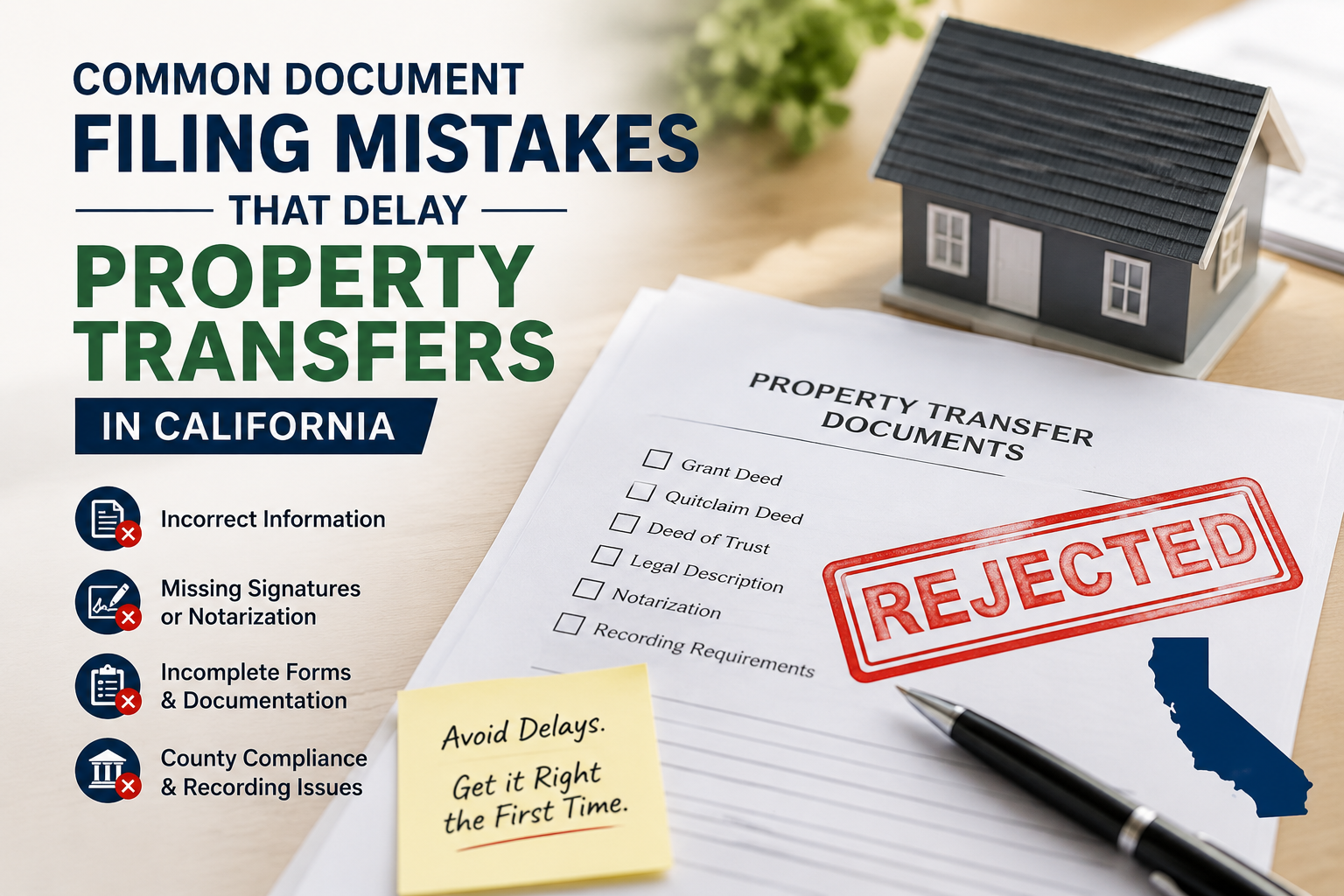
Some common issues include:
- Incorrect legal property descriptions
- Missing signatures or notarization requirements
- Incomplete forms
- Errors in names or ownership details
- Improper supporting documentation
- Formatting issues that fail county requirements
Even a minor discrepancy between names or property details can create additional review time and may require re-submission.
The Cost of Filing Errors
Document rejections can create more than administrative inconvenience. Delays may affect:
- Property transactions
- Refinancing timelines
- Estate planning processes
- Title updates
- Legal proceedings involving ownership interests
For businesses and individuals operating under time-sensitive conditions, filing issues can sometimes lead to additional legal and administrative costs.
Steps to Reduce the Risk of Rejection
Reviewing documents carefully before filing can significantly improve processing efficiency. Helpful practices include:
Verify all property information
Ensure addresses, parcel details, and ownership names match official records.
Confirm signing requirements
Some filings require notarization or additional supporting paperwork.
Review county-specific instructions
Requirements may vary between counties.
Double-check supporting forms
Tax declarations or related documentation may be required in certain circumstances.
Use professional assistance when needed
Legal support professionals and document specialists can help reduce filing errors.
Additional Resources for California Filings
Because document requirements can change and certain filings have unique rules, reviewing reliable guidance before submitting paperwork is important.
For readers looking for more information specifically related to avoiding quitclaim deed filing problems in California, this resource provides additional insights:
How to Avoid Quitclaim Deed Rejections in California
Understanding filing requirements before submission can save time and help avoid unnecessary delays in property transactions. Attention to detail early in the process often prevents larger issues later.