





Summarize this blog post with:
Obtaining a judgment is often only one step in the collection process. For many attorneys, law firms, and judgment creditors, the real challenge begins when it is time to locate assets and enforce a court order. Financial institutions frequently become part of this process, making proper service procedures a critical component of successful judgment enforcement.
When dealing with banks, credit unions, and other financial entities, even minor procedural mistakes can lead to delays, rejected documents, or additional court costs. That is why legal professionals throughout California often rely on experienced process servers and judgment enforcement specialists who understand the unique requirements involved in serving financial institutions.
Understanding the Role of Financial Institutions in Judgment Collection
Financial institutions routinely receive legal documents related to judgments, garnishments, restraining notices, subpoenas, and other enforcement actions. However, banks typically maintain strict internal procedures regarding how legal papers must be delivered and processed.
Serving the wrong branch, using incorrect documentation, or failing to comply with applicable state requirements can significantly slow down enforcement efforts. Attorneys handling collection matters should ensure that service is completed according to the applicable rules governing financial institutions and third-party asset holders.
Why Proper Service Is Essential
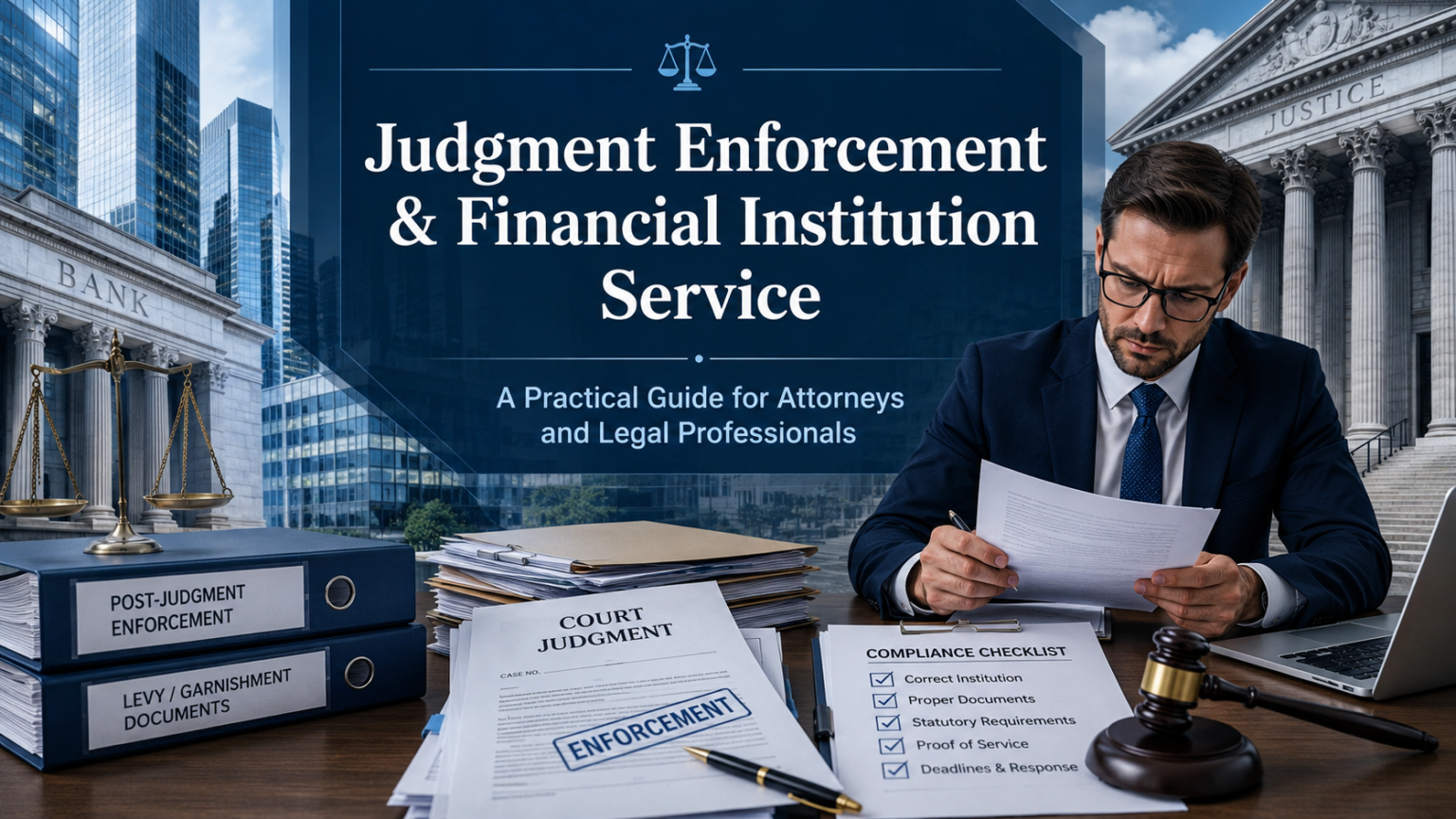
Successful judgment enforcement depends heavily on accuracy and compliance. Legal professionals should consider:
- Verifying the correct institution and legal service address
- Confirming the proper documents are included
- Following county and state-specific requirements
- Maintaining proof of service records
- Monitoring deadlines and response periods
A strategic approach helps reduce unnecessary delays and increases the likelihood of achieving a favorable outcome.
Common Challenges Attorneys Encounter
Many law firms discover that serving financial institutions can be more complex than serving individual defendants or businesses. Common obstacles include:
Multiple Branch Locations
Large banks may operate dozens or even hundreds of branches. Service must often be directed to a designated legal processing office rather than a local branch location.
Strict Compliance Standards
Financial institutions frequently require precise documentation and adherence to statutory requirements before acting on enforcement documents.
Time-Sensitive Deadlines
Collection matters often involve strict timelines. Delayed service can affect recovery efforts and create additional procedural hurdles.
Documentation Errors
Even small clerical mistakes can result in rejected paperwork, forcing attorneys to restart portions of the enforcement process.
Benefits of Working With Experienced Process Servers
Professional process servers who regularly handle judgment enforcement matters can provide several advantages:
- Knowledge of California service requirements
- Familiarity with financial institution procedures
- Accurate documentation and recordkeeping
- Faster turnaround times
- Reduced risk of procedural errors
For attorneys managing multiple enforcement matters, partnering with experienced professionals can improve efficiency and help keep cases moving forward.
Technology and Modern Enforcement Practices
Today’s legal support industry increasingly relies on technology to streamline enforcement efforts. Electronic tracking, status reporting, document management systems, and real-time updates help attorneys stay informed throughout the service process.
These tools provide greater transparency and allow law firms to monitor enforcement activities more effectively than traditional manual methods.
Choosing the Right Service Partner
When selecting a process serving company for enforcement-related matters, attorneys should evaluate:
- Experience with post-judgment enforcement
- Statewide coverage capabilities
- Knowledge of financial institution procedures
- Communication and reporting systems
- Reputation within the legal community
A reliable service partner can become an important extension of a firm’s litigation support team.
Additional Resources for California Attorneys
Attorneys seeking detailed information about serving bank levies, judgment enforcement procedures, and county-specific considerations can benefit from specialized guides published by experienced legal support professionals.
For a comprehensive overview of bank levy service procedures and practical considerations in California, read this detailed guide from Countrywide Process:
👉 “How to Serve a Bank Levy in San Mateo County (2026 Attorney Guide)”
Final Thoughts
Judgment enforcement requires careful planning, accurate service, and strict compliance with procedural requirements. Financial institutions play a significant role in many collection matters, making proper service practices essential for attorneys pursuing post-judgment remedies.
By understanding the challenges involved and working with experienced legal support professionals, attorneys can improve efficiency, reduce delays, and increase the likelihood of successful enforcement outcomes.