




When you’re involved in a California lawsuit, filing the complaint is just the beginning. After the case is underway, multiple documents must continue to be served properly — motions, oppositions, replies, notices, and other court filings.
Many attorneys and legal professionals overlook one critical detail: the correct method of serving these subsequent documents under California law.
Understanding this process isn’t just about compliance — it’s about protecting your case.
What Are “Subsequent Documents”?
In California civil procedure, once the initial summons and complaint are served, any later filings in the same case are considered subsequent documents. These may include:
- Motions
- Opposition papers
- Replies
- Notices
- Declarations
- Case management documents
Serving these documents improperly can delay hearings, invalidate filings, or even jeopardize your legal position.
Why Proper Personal Service Matters
California law allows multiple service methods depending on the circumstances — including mail, electronic service, and personal delivery. However, certain situations require strict compliance with personal service rules.
Failing to follow the correct method may result in:
- Court rejection of filings
- Delayed hearings
- Challenges from opposing counsel
- Possible sanctions
This is where understanding CCP §1011 becomes essential.
Understanding CCP §1011 Personal Service Requirements
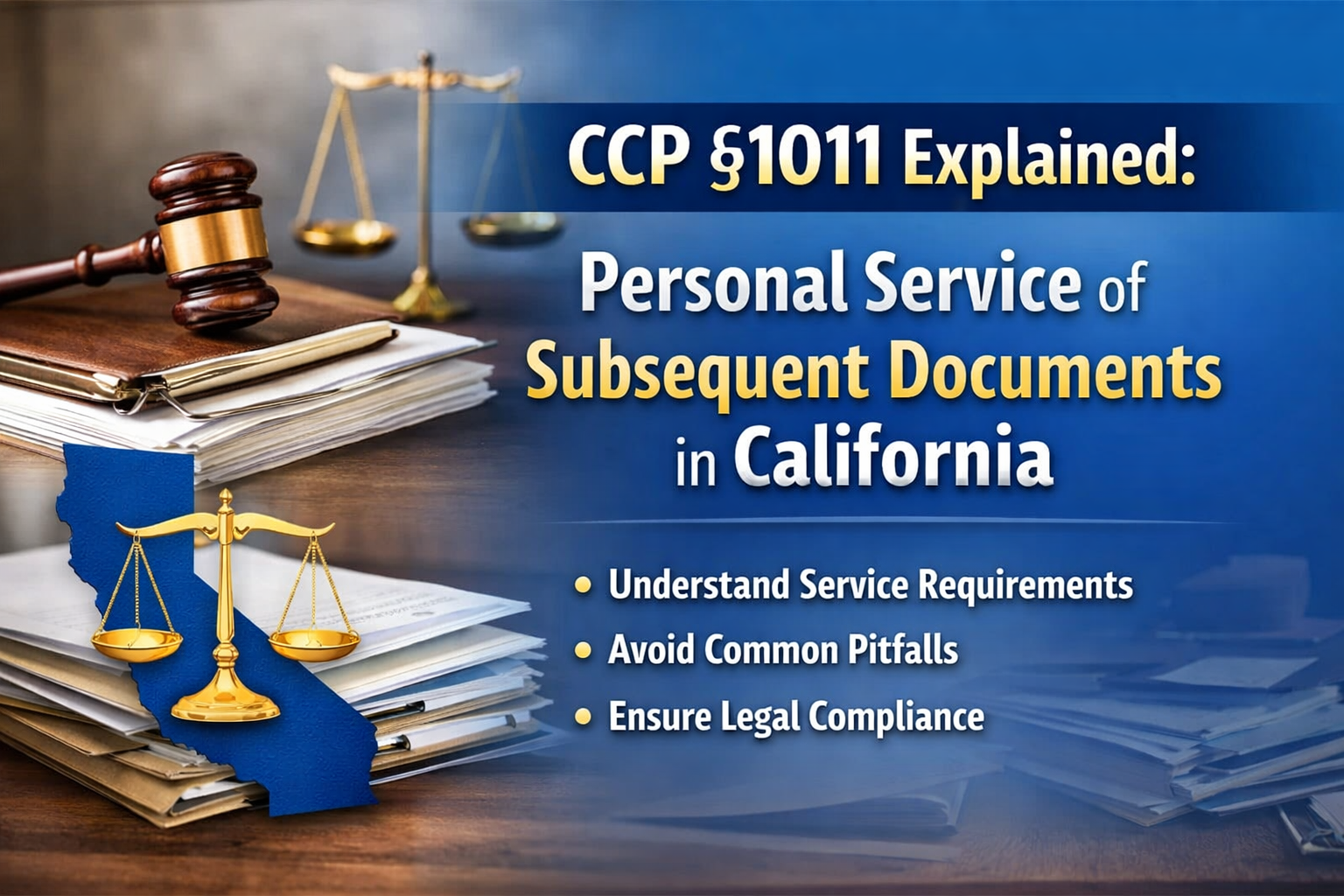
California Code of Civil Procedure §1011 outlines when and how personal service of subsequent documents must occur in an ongoing case. It clarifies:
- Who can receive service
- Where documents can be delivered
- When personal delivery is required
- How service timing affects court deadlines
Because these rules can be technical and situation-specific, it’s important to review them carefully before proceeding.
If you want a detailed breakdown written specifically for legal professionals handling California cases, this guide on CCP §1011 personal service of subsequent documents explains the requirements clearly, including practical insights on how courts interpret these service rules.
Common Mistakes in Serving Subsequent Documents
Even experienced professionals sometimes make errors such as:
- Serving the wrong party instead of the attorney of record
- Delivering to an outdated office address
- Miscalculating response deadlines
- Assuming electronic service is always permitted
These small mistakes can create large procedural problems.
Reviewing updated guidance on service methods ensures you’re protecting your client — and your case.
When Should You Choose Personal Service?
Personal service is often used when:
- Deadlines are tight
- Immediate confirmation of delivery is required
- There’s concern about disputes over receipt
- The court specifically requires it
Because procedural compliance can impact case outcomes, many law firms rely on professional process servers to handle service properly.
Why Staying Updated on Service Rules Matters
California civil procedure evolves through amendments, court interpretations, and local rules. What worked in one situation may not apply in another.
Having a reliable, clearly explained resource on CCP §1011 ensures you avoid unnecessary complications.
For attorneys, paralegals, and litigation teams working in California, understanding these service requirements is not optional — it’s essential for protecting procedural integrity.
Final Thoughts
Serving documents after a lawsuit begins may seem routine, but the legal details matter. Proper service safeguards deadlines, maintains due process, and keeps your case moving forward without avoidable setbacks.
If you’re handling California litigation and want a clear, practical explanation of how personal service works under CCP §1011, reviewing this comprehensive guide on CCP §1011 personal service of subsequent documents can help you stay compliant and confident in your filings.