





Transferring property through a quitclaim deed may seem straightforward, but in California, even small errors can lead to document rejection by the county recorder’s office. A rejected deed can delay property transfers, create legal complications, and require resubmission with additional fees. Understanding the most common reasons for rejection can help ensure the recording process goes smoothly the first time.
If you want a detailed step-by-step explanation, you can read this guide on how to avoid quitclaim deed rejections in California, which explains the filing process and common compliance issues.
Why Quitclaim Deeds Get Rejected
County recorders in California follow strict formatting and documentation standards when accepting property records. When a quitclaim deed does not meet those standards, the recorder’s office may reject it. Some of the most common reasons include missing required information, improper document formatting, and incomplete supporting paperwork.
Because property transfers affect ownership rights, the county must ensure that every recorded document meets legal requirements before it becomes part of the public record.
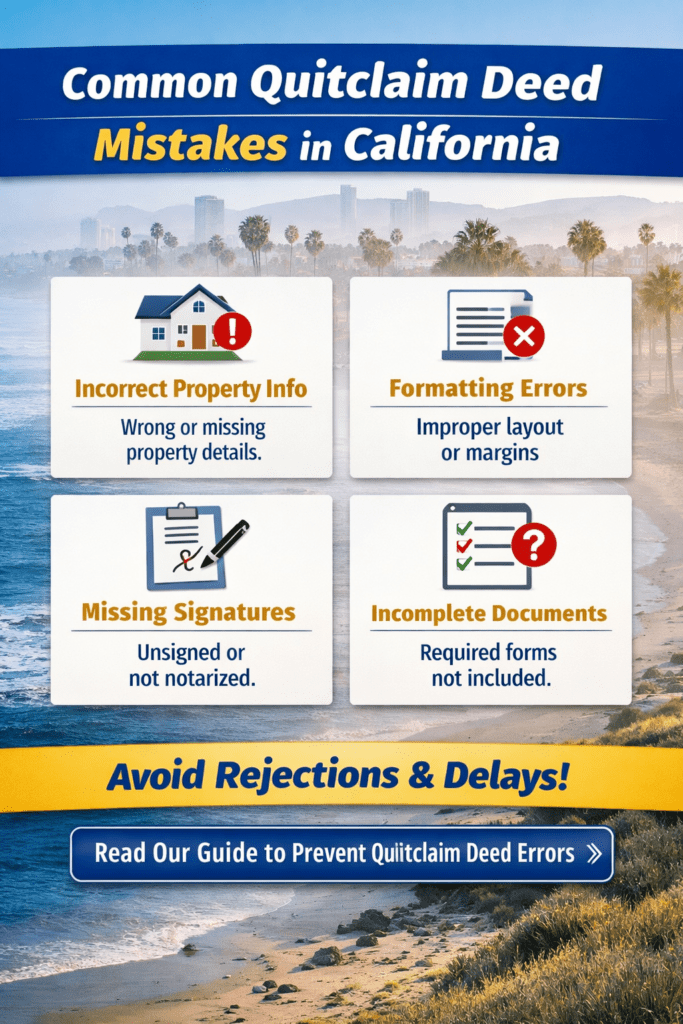
Incorrect or Missing Property Information
One of the most frequent causes of rejection is inaccurate property details. The legal description of the property must match the official county records exactly. If the document contains an incomplete description, an incorrect parcel number, or a mismatch with existing records, the recorder may refuse to accept it.
Using the precise legal description from the previous deed is often the safest approach to avoid this issue.
Formatting Errors and Document Layout Issues
California counties have specific formatting rules for recorded documents. These rules may include margin sizes, font clarity, page layout, and reserved spaces for recorder stamps.
If a deed is submitted with incorrect margins or poorly formatted pages, the county recorder may reject it before even reviewing the content. Ensuring that the document follows county formatting guidelines is an important step in avoiding delays.
Missing Signatures or Notarization
Another common reason for rejection is improper execution of the deed. Quitclaim deeds typically require the grantor’s signature, and in most cases, that signature must be notarized. If the notarization is missing or the signature does not comply with state requirements, the recorder may refuse the document.
Carefully verifying signatures and notarization before submission can prevent this problem.
Incomplete Supporting Documents
In California, certain property transfers require additional documents such as Preliminary Change of Ownership Reports (PCOR) or transfer tax declarations. If these required forms are missing, the county may reject the quitclaim deed until the correct documentation is provided.
Each county may have slightly different submission requirements, which is why reviewing local guidelines before filing is essential.
How to Avoid Recording Delays
Preventing quitclaim deed rejection is largely about preparation. Before submitting the document, it’s important to double-check the property description, confirm that all required signatures and notarization are included, and ensure the document meets county formatting standards.
Working with professionals who handle document recording regularly can also help reduce the chances of rejection and speed up the approval process.
Final Thoughts
A quitclaim deed is often used to transfer property between family members, update ownership records, or move property into a trust. While the process may seem simple, strict county recording requirements mean that even minor mistakes can result in delays.
Taking the time to verify details and follow county guidelines can help ensure your document is accepted the first time—saving time, money, and unnecessary complications in the property transfer process.