





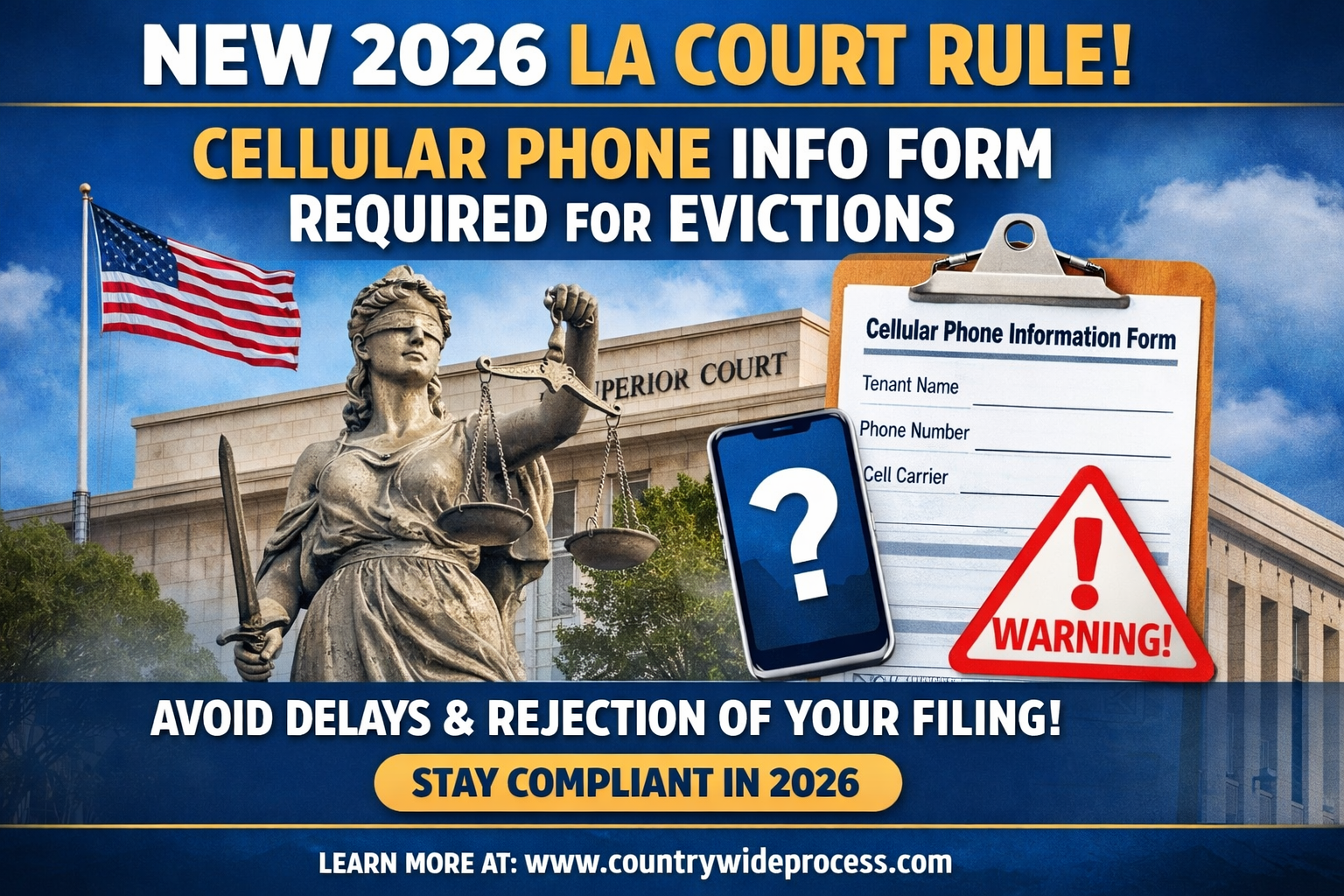
Legal procedures rarely stay static, and 2026 is bringing an important update that landlords, attorneys, and property managers in Los Angeles cannot afford to ignore. A new requirement from the Los Angeles Superior Court is set to impact how unlawful detainer (eviction) cases are filed—and even a small oversight could lead to delays or rejected submissions.
If you are involved in eviction proceedings, understanding this change is essential to keeping your case on track.
A New Requirement You Need to Know
Beginning in 2026, the court now requires an additional form to be submitted as part of the eviction filing process. This form focuses specifically on collecting cellular phone information related to the parties involved in the case.
While it may seem like a minor administrative step, courts are increasingly emphasizing accurate and complete contact information to improve communication and streamline case handling. Missing this requirement could mean your paperwork is considered incomplete.
For a detailed breakdown, you can refer to this guide on the
👉 New LA Superior Court Rule
Why This Change Matters
At first glance, adding another form may not seem like a significant shift. However, in legal filings—especially eviction cases—precision is everything.
Here’s why this update is important:
- Filing Rejections Are Costly
Even a small missing document can result in your case being rejected by the court clerk. - Delays in Eviction Proceedings
Time-sensitive cases like unlawful detainers depend on strict timelines. Any delay can impact outcomes. - Increased Scrutiny by Courts
Courts are becoming more detail-oriented, meaning incomplete filings are less likely to pass through unnoticed.
Who Should Pay Attention to This Rule?
This update is not just for legal professionals—it affects anyone involved in eviction filings, including:
- Landlords managing rental properties
- Property management companies
- Real estate professionals handling tenant disputes
- Attorneys and legal assistants preparing filings
If you fall into any of these categories, adapting to this requirement should be a priority.
How to Stay Compliant
The best way to avoid issues with this new rule is to build it into your standard filing process. Treat it as a non-negotiable step rather than an optional addition.
A few practical tips:
- Double-check your document checklist before submission
- Ensure all required contact details are accurate
- Work with experienced professionals who understand court requirements
- Stay updated with any additional procedural changes
Being proactive now can save you significant time and frustration later.
The Bigger Picture: Evolving Court Procedures
This change reflects a broader trend—courts are modernizing and placing greater emphasis on efficient communication and accurate data collection.
As legal systems evolve, compliance is no longer just about knowing the law; it’s about staying updated with procedural requirements. Those who adapt quickly will always have an advantage.
Final Thoughts
The introduction of the cellular phone information form may seem like a small adjustment, but in the world of legal filings, small details can make a big difference. Missing this step could mean delays, rejected filings, and unnecessary complications.
Staying informed and prepared ensures your unlawful detainer cases move forward without disruption.
If you regularly handle eviction filings, now is the time to update your process and stay ahead of the curve.