


Summarize this blog post with:
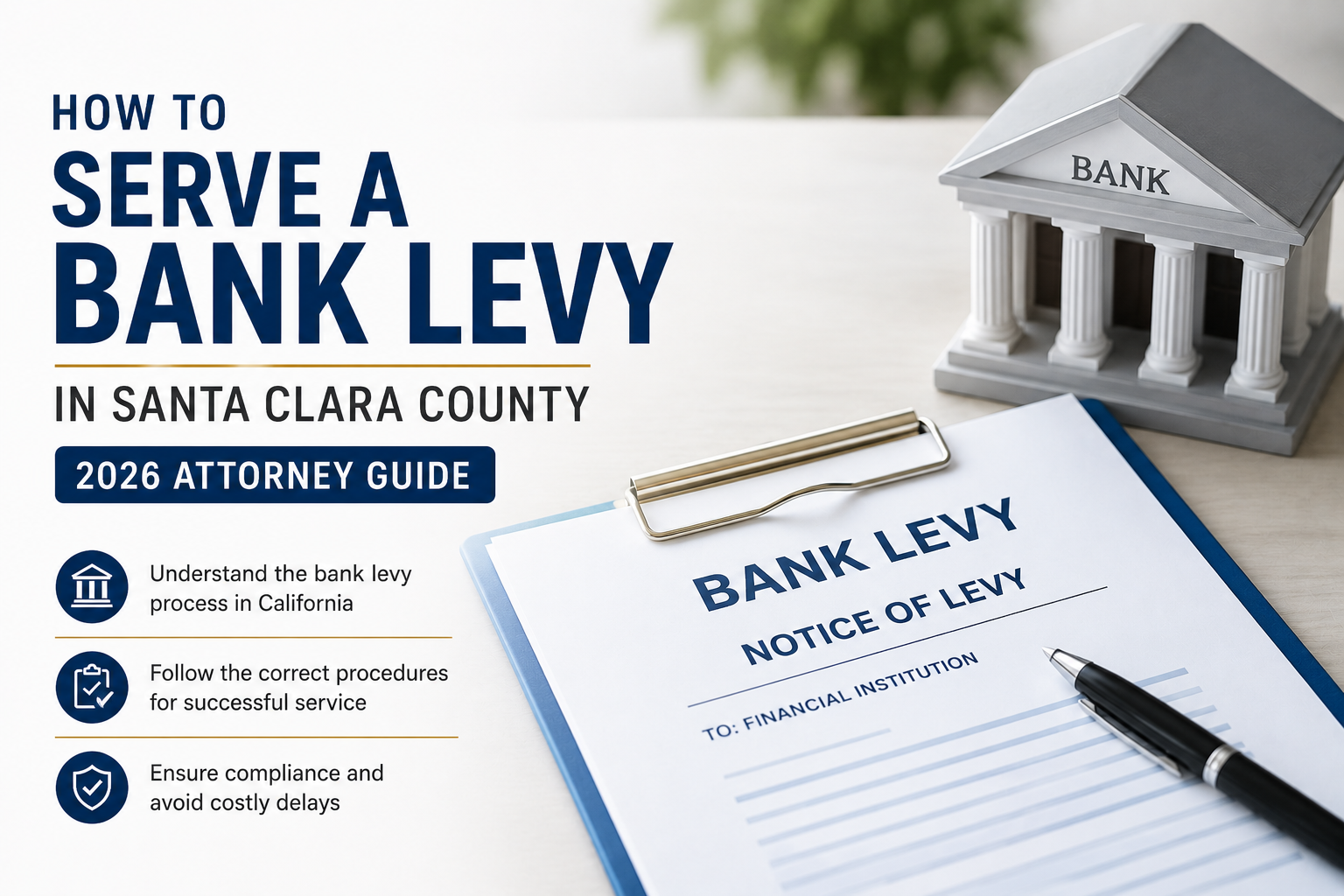
Collecting on a judgment is often more challenging than obtaining one. Even after winning a lawsuit, creditors may need to use legal enforcement tools to recover the money they are owed. One of the most effective methods is a bank levy, which can allow funds held in a debtor’s bank account to be applied toward a judgment.
If you’re pursuing judgment enforcement in Santa Clara County, California, understanding the bank levy process can help you avoid unnecessary delays and improve the likelihood of successful recovery.
This guide provides a general overview of how bank levies work. For a detailed attorney-focused guide specific to Santa Clara County, a helpful resource is linked at the end of this article.
What Is a Bank Levy?
A bank levy is a legal procedure that authorizes a financial institution to freeze and potentially release funds from a debtor’s bank account to satisfy an outstanding court judgment.
Unlike wage garnishment, which collects money over time from future earnings, a bank levy targets funds that are already on deposit.
The process is commonly used after:
- Civil judgments
- Commercial litigation
- Contract disputes
- Business debt collection
- Certain enforcement proceedings permitted by law
When Can a Creditor Use a Bank Levy?
Generally, a creditor must first obtain a valid court judgment before attempting to levy a bank account.
Once a judgment has been entered, the creditor may begin exploring available enforcement remedies, which could include:
- Bank levies
- Wage garnishments
- Property liens
- Asset examinations
- Other collection methods authorized by law
Specific procedures depend on state law and court rules.
Why Bank Levies Are Often Effective
A bank levy can be one of the fastest judgment collection tools because it reaches existing funds rather than waiting for future income.
Potential advantages include:
- Immediate account restraint
- Faster judgment recovery
- Reduced collection delays
- Ability to recover available funds in qualifying accounts
However, success often depends on locating the correct financial institution and following applicable legal procedures.
Challenges During the Levy Process
Although the concept appears straightforward, several issues may complicate enforcement.
Common challenges include:
Identifying the Correct Bank
A levy cannot succeed if the creditor does not know where the debtor maintains accounts.
Asset investigations are often an important first step.
Exempt Funds
Not every dollar held in a bank account may be subject to collection.
Certain funds may receive legal protection depending on applicable federal or state law.
Procedural Requirements
Judgment enforcement involves numerous deadlines, forms, and service requirements.
Missing a procedural step can delay enforcement or require documents to be reissued.
Timing
Funds available today may not remain available indefinitely.
Prompt action after identifying assets can improve collection opportunities.
The Importance of Proper Service
Bank levy documents generally must be served correctly on the appropriate parties.
Improper service may result in:
- Delayed enforcement
- Rejected paperwork
- Additional court costs
- Lost collection opportunities
Many law firms therefore work with professional process serving companies that understand local court procedures and judgment enforcement requirements.
Working With Experienced Legal Support
Judgment enforcement often requires coordination between:
- Attorneys
- Courts
- Financial institutions
- Sheriffs or levying officers
- Process servers
Having knowledgeable litigation support professionals involved can streamline the process while reducing unnecessary delays.
Tips for Creditors
Before beginning a bank levy, consider:
- Confirming the judgment remains enforceable
- Identifying the debtor’s financial institution
- Maintaining accurate case documentation
- Understanding applicable exemption laws
- Following all procedural requirements carefully
- Consulting qualified legal counsel when necessary
Preparation often plays a significant role in successful judgment enforcement.
Final Thoughts
A bank levy can be a valuable tool for collecting unpaid judgments, but successful enforcement depends on following the proper legal process and complying with applicable court procedures.
For creditors and attorneys handling collections in Santa Clara County, understanding local practices can make enforcement more efficient and reduce costly delays.
If you’re looking for a more comprehensive attorney-focused guide covering the bank levy process in Santa Clara County, including practical considerations and procedural insights, read the detailed resource from Country Wide Process:
It provides additional guidance for legal professionals involved in judgment enforcement and service of legal documents in California.