



Summarize this blog post with:
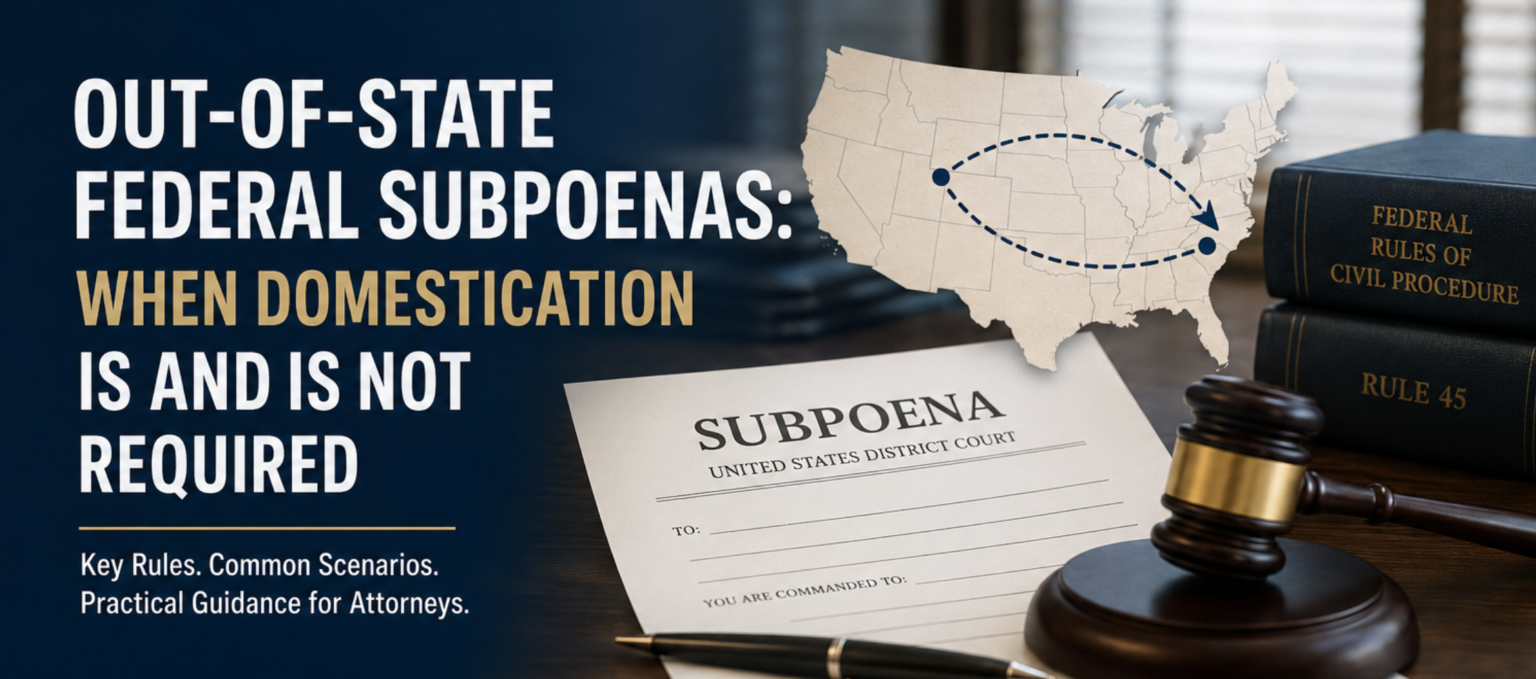
Interstate litigation has become increasingly common, especially in federal matters involving corporations, remote witnesses, financial institutions, and nationwide discovery requests. Yet one issue continues to create confusion for attorneys and legal support teams alike: when exactly does an out-of-state federal subpoena require domestication?
Many legal professionals assume every subpoena crossing state lines must go through a domestication process. In reality, the answer depends on several important factors, including the court issuing the subpoena, the jurisdiction where discovery is sought, and whether the subpoena involves federal or state procedure.
A detailed breakdown of these distinctions is explained in this comprehensive guide from Countrywide Process, which explores the procedural differences attorneys should understand before attempting service.
Why This Issue Creates Problems for Law Firms
Federal subpoena procedures can become complicated when discovery targets are located outside the issuing state. Missing a required domestication step can result in:
- Delayed discovery timelines
- Objections from opposing counsel
- Invalid service attempts
- Court compliance issues
- Additional filing expenses
For busy litigation teams, these procedural mistakes can significantly impact scheduling orders and case strategy.
Understanding the Difference Between Federal and State Discovery Rules
One of the biggest misconceptions in interstate discovery is treating federal subpoenas the same way as state subpoenas.
In many state court matters, attorneys rely on the Uniform Interstate Depositions and Discovery Act (UIDDA) to domesticate subpoenas before service in another jurisdiction. Federal subpoenas, however, operate under separate procedural frameworks governed primarily by Rule 45 of the Federal Rules of Civil Procedure.
This distinction is critical because federal subpoenas may not always require the same domestication process attorneys are accustomed to in state litigation.
The analysis provided by Countrywide Process’ federal subpoena article helps clarify where those lines are drawn and when additional filing steps may still become necessary.
Common Situations Where Confusion Happens
Attorneys frequently encounter uncertainty in scenarios involving:
- Witnesses located in another state
- Nationwide corporate record requests
- Remote depositions
- Non-party discovery
- Compliance districts different from the issuing court
- Electronic document production
As remote litigation and multi-jurisdiction disputes continue to increase, understanding these procedural nuances has become more important than ever.
Why Experienced Process Support Matters
Even when domestication is not technically required, proper subpoena handling still requires precision. Deadlines, mileage limitations, service requirements, and compliance jurisdictions all play important roles in enforceability.
Many litigation teams work with professional subpoena support providers to avoid procedural errors and streamline interstate service coordination.
Experienced providers can assist with:
- Federal subpoena preparation
- Multi-state service coordination
- Witness scheduling
- Court filing logistics
- Compliance tracking
- Affidavits and proof of service
Final Thoughts
Out-of-state federal subpoenas are not always as straightforward as they appear. The distinction between when domestication is required and when federal procedure independently controls can have major consequences for litigation efficiency and enforceability.
Attorneys handling interstate discovery should carefully review applicable federal rules and local court procedures before proceeding.
For a more detailed legal-process overview, including examples and procedural explanations, review the full article published by Countrywide Process Services.